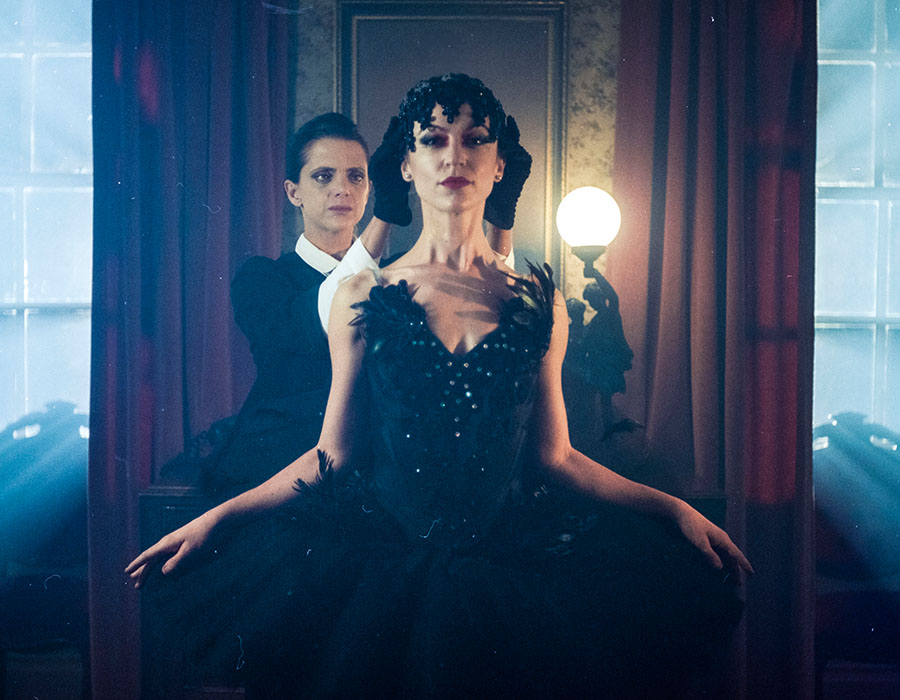
Our Mission

Our Mission portrait
ROOTED IN BRITISH CINEMA,
THEATRICAL PERFORMANCE
AND THE ROMANTIC GOTHIC

BUILDING A NEW GOLDEN AGE
OF BRITISH HORROR

Our mission is guided by six principles: the rebirth of the classic studio system, the making of stars, the inheritance of British cinema and theatre, a renewed theory of performance, the Romantic Gothic, and stories drawn from the haunted spirit of these islands.

The Classic Studio System Reborn

The Classic Studio System Reborn

The British Horror Studio exists to restore something that modern independent cinema has too often lost: the power of a unified creative house. We believe that great films are not built from isolated fragments, but by a company of artists, technicians, performers, writers, designers and producers working together beneath one coherent vision.

In the spirit of the great British horror houses, from Hammer to Amicus, our aim is not simply to make individual films, but to build a world, a language, a recognisable identity and a living tradition.

There was once a romance to the studio system: the sense that films emerged from a house style, a repertory of faces, a shared atmosphere, and a creative family whose work deepened from picture to picture. That is the spirit we seek to revive. We are developing our own productions, our own repertory of talent, our own visual style, and our own standards of craft.

We are not merely assembling projects from the outside. We are cultivating a studio culture from within, where each film strengthens the next, where artists grow through collaboration, and where the audience can once again recognise the hand, heart and atmosphere of a true British horror studio.
The Making of Stars

The Making of Stars

We believe screen talent should be nurtured, shaped and celebrated. The great studios understood that an actor was not merely cast, but revealed: a face, a voice, a bearing, a quality of mystery, glamour, danger or romance.

At the British Horror Studio, we seek to cultivate lasting screen figures who can grow across productions and become part of a wider mythology. At the heart of this is our repertory company: a returning family of actors and artists whose presence helps define the studio’s identity.

From Megan Tremethick’s rise as one of our defining leading ladies, to the distinctive screen presence of Novarro Ramon and the work of Dorian Todd as both actor and filmmaker, we are building a company with style, purpose and continuity. Alongside them stand distinguished figures such as Golden Globe nominee Jane Merrow, Ian McCulloch of the Royal Shakespeare Company, and Laurence R. Harvey, one of modern horror’s most recognisable character actors.

We believe in leading ladies, romantic presences, character actors and filmmakers who audiences can come to know, follow and cherish. In doing so, we hope to restore a little of the old studio glamour: the sense that stars are not simply found, but made.

British by Culture

British by Culture

The British Horror Studio is rooted in the great traditions of British cinema, theatre and performance. Our inspiration lies not only in horror, but in the wider artistic inheritance that shaped it.

Shakespeare and the stage, Laurence Olivier and Vivien Leigh, the romantic splendour of Powell and Pressburger, the feverish imagination of Ken Russell, and the disciplined theatrical power that has long distinguished British screen acting.

We believe British horror is at its strongest when it draws from this deep well of language, gesture, atmosphere and emotional conviction. From Hammer and Amicus to the grander traditions of British romanticism, our work looks back to an era when cinema could be heightened without embarrassment, and emotional earnestness was not something to be feared. We believe that beauty, terror, theatricality and sincerity can still belong together on screen.

Our films are made for the world, but they are shaped by the artistic traditions of these islands: theatrical, romantic, literate, strange, melancholic and alive with ghosts.

A Theory of Performance

A Theory of Performance

At the heart of the British Horror Studio is a belief that performance is an art of expression, not concealment. We do not reject naturalism because it is too real; we question the modern illusion that naturalism is realism itself. What is often called “natural” is frequently no less stylised than the theatrical traditions it claims to replace.

Our approach draws from the traditional British technique: from Shakespeare, the Old Vic, the power of speech, the discipline of the body, and the great screen presences of Laurence Olivier, Vivien Leigh and their generation. In this tradition, the performer was not merely a person behaving casually before a camera, but an instrument of language, emotion and myth.

We are developing a modernised theory of performance inspired by that inheritance. It is not imitation, nor nostalgia for its own sake, but an attempt to recover what has been neglected: poise, diction, emotional clarity, stylised truth and the ability to command the frame.

In an age shaped by pop-cultural irony and flattened performance norms, we believe British cinema must once again defend its own artistic language. In place of fashionable emptiness, we seek earnestness. In place of casual detachment, we seek emotion.

The Romantic Gothic

The Romantic Gothic

The Romantic Gothic is the emotional heart of our studio. We believe in horror that is not merely brutal, but beautiful: horror that carries longing, sorrow, desire, terror and wonder. Our inspiration lies in the great romantic tradition of Gothic art and literature, from the haunted moral landscapes of M.R. James and Sheridan Le Fanu, to the doomed passions of Mary Shelley, Bram Stoker and the wider Gothic imagination.

In these works, the supernatural is not only a source of fear, but a doorway into the hidden life of the soul.

We look also to the great British horror houses and their many moods: the feverish colour and sensual dread of Hammer, the folk darkness of Tigon, and the moral cruelty and uncanny wit of Amicus. These films understood that horror could be theatrical, emotional and sincere.

The Gothic allows us to speak of love, death, faith, fear, mortality and transcendence in grand, poetic terms.

It is cinema as dream, confession, nightmare and romantic expression.

Stories of These Isles

Stories of These Isles

The British Horror Studio draws from the histories, legends and folklore of Britain and Ireland, not as decorative background, but as living material for cinema. These islands are crowded with ghosts: ancient stones, ruined abbeys, coastal towns, industrial shadows, old cinemas, council estates, churches, pubs, hospitals, back roads, forgotten villages and cities built upon older worlds.

Our horror belongs to this soil, but it is not confined to one kind of setting. The Gothic can live in a castle, a bedsit, a factory, a psychiatric ward, a tenement stairwell, a seaside arcade or an abandoned picture house.

What matters is the way these places are seen: through a British and Irish lens of language, class, ritual, eccentricity, romance, melancholy and dread. We are interested not only in folklore as myth, but in folklore as atmosphere: the stories people whisper, the warnings they inherit, the customs they half-believe, and the private terrors that survive beneath ordinary life.

These are not imported nightmares, nor stories shaped by passing fashion or the latest idea to flicker across social media. Ours are homegrown hauntings, formed by the artists who know these islands: their wounds, their beauty, their absurdity, their faith, their violence and their ghosts.